
How hotel owners and operators can connect fragmented systems, evaluate the evidence, and turn promising AI tools into measurable improvements.
In July 2025, Bernard Tan of Castle Resorts & Hotels described a problem that will sound familiar to many hotel operators: his group used four or five property management systems, while individual properties typically operated ten or more systems. Even cloud software had left the business with difficult integrations and duplicated messaging. His account illustrates a practical obstacle: buying capable tools does not ensure that they work together. Read the original Hospitality Net interview.
Now consider a hypothetical guest asking for a late checkout. An AI assistant can understand the request and write a courteous reply. Delivering the service requires more: checking the next arrival, confirming housekeeping capacity, applying the hotel’s policy, updating the reservation, and communicating the decision. A convincing answer is only one part of the job.
This is the central test for hotel AI: can it help a business make and fulfil a better decision, with a result the operator can verify?
For owners, general managers, and technology leaders, that question offers a practical way to assess proposals for an AI-first hospitality operating system. The ambition becomes useful when it translates into connected workflows, clear accountability, and measurable value.
Start with the handoff
The recurring problem across the research is fragmentation between systems and departments. A property management system, or PMS, holds reservations and room status. Other applications handle restaurant sales, guest communication, maintenance, and pricing. To complete a service, people or software must carry information across those boundaries.
There is evidence that this creates difficulties. In a 2025 survey commissioned by hospitality technology suppliers Hapi and Revinate, 49% of respondents reported struggling to access data, and 40% identified disconnected systems as their biggest obstacle. The survey covered nearly 200 hospitality professionals globally, between April and May 2025. These are supplier-sponsored, self-reported findings, rather than a representative census of the industry, but they provide a useful signal about the problem. See the report announcement and methodology.
In the late-checkout scenario, the relevant question is whether the request reaches the right operational decision. If the assistant can read a policy but cannot obtain current room status, it should acknowledge the request and seek confirmation. If approval is granted but housekeeping never receives the update, the workflow remains incomplete.
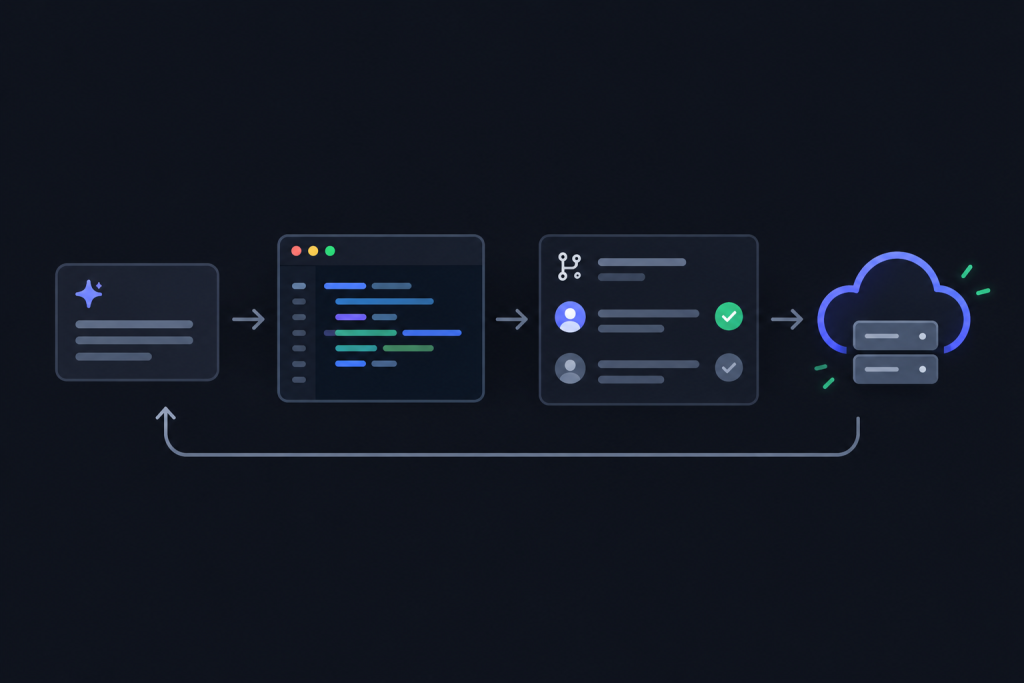
A useful way to inspect a proposed system is to trace one request from beginning to end: what information arrives, which records it uses, who may approve the action, where the result is recorded, and how completion is confirmed.
That exercise can reveal a modest integration project with immediate value. It can also expose an ambitious demonstration that depends on staff silently repairing missing steps. Both are more informative than a fluent conversation on a screen.
Read the evidence at the right scale
The business pressure behind automation is real, although its scale depends on the market and period. An American Hotel & Lodging Association survey of 282 hoteliers, conducted from December 2024 to January 2025, found that 65% reported staffing shortages. The share had declined from the association’s May 2024 survey. This is historical US evidence, with signs of improvement; it should not become a claim that two-thirds of hotels worldwide are understaffed today. See AHLA’s February 2025 findings.
Evidence of an operational problem is also different from evidence that a particular AI product solves it.
One stronger example comes from revenue management. A 2023 study by Ji Chen and colleagues evaluated a tailored system in a budget hotel chain. It combined reinforcement learning, which learns decision strategies from feedback, with mathematical capacity allocation. Using a synthetic-control comparison, the authors reported an 11.80% improvement in revenue per available room, or RevPAR. Results differed across pilot hotels. Read the study’s published abstract.
That supports a specific conclusion: a carefully designed decision system can improve a defined commercial process in a particular setting. It does not establish the return from an autonomous hotel platform, nor does a revenue increase establish a profit increase.
Food waste provides another instructive example. Hilton’s Green Ramadan 2024 summary reports that average post-consumer plate waste fell from 129 to 102 grams per cover between the first and final weeks, a 21% reduction across the 32 hotels included in its analysis. The programme combined waste measurement with interventions in service and guest behaviour. See Hilton’s programme summary.
Winnow’s account describes AI-enabled tracking alongside kitchen teams adjusting production and portions. These are accounts of the same programme, not independent confirmations. The reported improvement belongs to the combined intervention; the material does not isolate AI’s contribution through a controlled experiment. Read the implementation case.
The practical lesson is to ask what changed around the technology, and whether those conditions exist in your property.
Give AI a bounded role
The supplied research describes opportunities spanning guest communication, staffing, energy, maintenance, and total revenue. These are useful areas to investigate. They require different kinds of decisions and different standards of proof.
For deployment, it helps to separate understanding, prediction, and execution.
A language model might interpret a guest’s message or draft a response. A forecasting model might estimate tomorrow’s breakfast demand. Established software can apply a fixed cancellation policy or calculate a bill. A workflow can then request approval and update the relevant record. Each component needs to justify its place in the process.
Consider a hypothetical air-conditioning complaint. AI could classify the message and assemble relevant room information. A staff member might decide whether to send maintenance, offer a room move, or provide another remedy. Completion requires someone to confirm that the guest’s problem has been addressed.
The business outcome is the resolved complaint. Useful measures could include resolution time, repeat contacts, and compensation cost, alongside guest feedback. Counting messages answered would describe activity without establishing the quality of the service.
The same discipline applies commercially. RevPAR tracks room revenue relative to available rooms. Total revenue per available room broadens the view to other hotel revenue, such as dining and spa services. Neither measure, by itself, accounts for every cost of serving that business.
For a hypothetical late-checkout offer, evaluate the extra contribution after cleaning costs and any disruption to the next arrival. A recommendation that increases sales while creating more expensive operational problems needs to be reconsidered.
Treat integration as an operating commitment
The research’s vision of a common operating layer is attractive: different applications could share enough context to coordinate their actions. Implementing that vision requires ongoing work on access, data meaning, and reliability.
An application programming interface, or API, allows software systems to exchange information or request actions. Access alone does not establish that an integration will keep working under real operating conditions. Mews’s official integration guidance, for example, discusses failed requests, rate limits, event notifications, and recovery practices. These are concrete implementation constraints, rather than reasons to reject integration. Read Mews’s Connector API best practices.
For operators, the procurement question becomes specific: what happens when an update arrives late, a request fails, or a room’s status changes while an offer is being approved? Ask the supplier to demonstrate those conditions and identify who owns recovery.
Shared meaning matters too. A room described as available for sale may still require cleaning. A recorded preference may belong to an earlier stay. Decide which record governs each action and how conflicting information will be handled.
New protocols can help connect components. The Model Context Protocol, or MCP, standardizes connections between AI applications and external tools or data. Agent2Agent, or A2A, supports communication between independent agents. Their official documentation describes complementary roles. Read the MCP introduction and the A2A comparison.
Those capabilities support technical cooperation. They do not, by themselves, establish accurate hotel data, commercial agreements, or demand for a new booking channel. The research’s vision of guest agents negotiating directly with hotel agents remains a scenario to evaluate. It should not be entered into a business case as guaranteed commission savings.
Earn autonomy through a pilot
An effective first project should have a clear owner, enough recurring activity to evaluate, accessible data, and consequences the team can manage. That could mean preparing replies for staff approval, forecasting food production, or prioritizing room preparation. The choice should follow the property’s constraints.
Begin with a baseline. Record how the process works now: how long it takes, where errors occur, and what staff do to correct them. Agree on the primary outcome and the conditions that must remain acceptable. For guest requests, these might include completion time, incorrect commitments, repeat contacts, and staff effort.
Next, test recommendations before delegating consequential actions. Compare them with staff decisions, investigate disagreements, and identify whether the cause is missing data, an unclear policy, or a poor recommendation. Staff should be able to explain why a suggested action would fail in practice.
Delegation can then expand within explicit limits. A system might prepare a late-checkout offer for approval before receiving permission to confirm a narrow set of eligible requests. Escalation rules should identify who takes over when information is missing or circumstances fall outside those limits.
This approach is consistent with NIST’s Generative AI Profile, which addresses confident false outputs, human oversight, testing, and monitoring. The profile also cautions against extrapolating capability from narrow or anecdotal assessments. See NIST’s risk-management guidance.
Evaluate the pilot against a credible comparison. Where feasible, use comparable properties or a staggered rollout. A simple before-and-after result deserves caution if occupancy, weather, staffing, or the guest mix changed at the same time. The purpose is to understand what caused the improvement well enough to decide whether expansion is justified.
Then calculate net value. Include integration, subscriptions, support, training, staff review, and error correction. Distinguish additional contribution from gross revenue, and released staff capacity from cash savings. Time saved becomes useful when the hotel can put it to work; it does not automatically reduce payroll.
Before expansion, confirm that another property has the relevant operating conditions. Different buildings, service promises, staffing patterns, or software can change the result. A successful pilot supplies evidence for the next decision, while leaving room to adapt the implementation.
Protect the service you are trying to improve
There are reasonable cases for proceeding slowly. A small property may gain more from a reliable PMS and a simpler workflow than from coordinating several AI agents. A hotel with inconsistent room-status updates may need to improve that process before delegating guest commitments. These are decisions about priorities and readiness.
Buying more functions from one supplier can reduce some coordination work, but it also deserves an exit plan. Tan’s account of Castle’s technology challenges includes concerns about dependence on a single vendor. Read his discussion of integration and vendor choice.
Ask what information can be exported, how another supplier would take over, and which operational procedures remain usable during a transition. Also give staff a clear route to override a recommendation and guests an easy way to reach a person.
For guest data, define the purpose of each use and limit access accordingly. A useful preference should improve a service the hotel can actually deliver. Gathering more information without a clear operational purpose adds complexity to the design.
The goal is a hotel that can make reliable promises and keep them. Start with one consequential handoff, connect the information and people it needs, and measure the completed outcome. That is how a compelling vision of hotel AI becomes a business capability worth expanding.
Further reading
- Bernard Tan on Castle Resorts & Hotels’ integration challenges. This operator interview explains how fragmented systems, duplicated work, and vendor dependence shape real technology decisions.
- The Future of Hotel Data: findings and survey methodology. This Hapi and Revinate announcement provides a supplier-sponsored snapshot of data access and integration difficulties, with its survey scope stated.
- AHLA: 65% of surveyed hotels report staffing shortages. The original release supplies dates, sample size, and context for the historical US staffing figure.
- A reinforcement learning approach for hotel revenue management with evidence from field experiments. The published abstract describes a narrowly defined hotel-chain pilot, its evaluation method, and variation in reported results.
- Hilton’s Green Ramadan 2024 executive summary. The programme’s own summary connects measured plate waste with operational and behavioural interventions.
- Mews Connector API best practices. Official technical guidance makes the reliability work behind software integration concrete.
- What is the Model Context Protocol?. The official introduction explains how MCP connects AI applications with external tools and information.
- A2A and MCP: detailed comparison. This official explanation distinguishes communication between agents from connections to tools and resources.
- NIST: Generative Artificial Intelligence Profile. This cross-sector framework provides a deeper treatment of evaluation, oversight, monitoring, and the limits of capability claims.